The Indian food history is the history of invention in times of necessity and inheritance from diverse cultures. Some dishes were invented for the sake of masses while some others were borrowed from across geographies. Many such interesting stories of Indian food are still unheard of. saksham nayak takes a few picks from the grave of history to share with you on Travel Beats, a portal for Indian Diaspora.
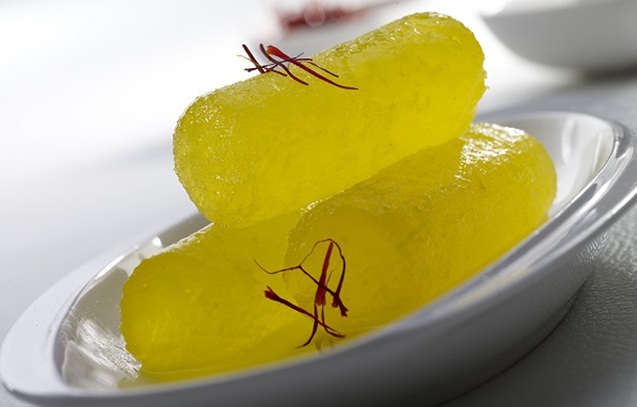
Petha is as old as the Taj Mahal
What to eat in Agra? Whoever has been to the city of the Taj Mahal says that Petha is the best thing to eat in Agra. The invention of Agra ka Petha is linked to the construction of the Taj Mahal in the Mughal Empire. When the colossal monument was under construction, some 21,000 workers were bored of the daily meal comprising only dal and roti. The then Mughal Emperor Shah Jahan shared his concern with master architect Ustad Isa Effendi, who requested Pir Naqshbandi Sahib for a solution to the Emperor’s worries. It is believed that the Pir went into a trance during prayers one day and received the recipe of Petha from the Almighty. Then, some 500 cooks made Petha for the workers.
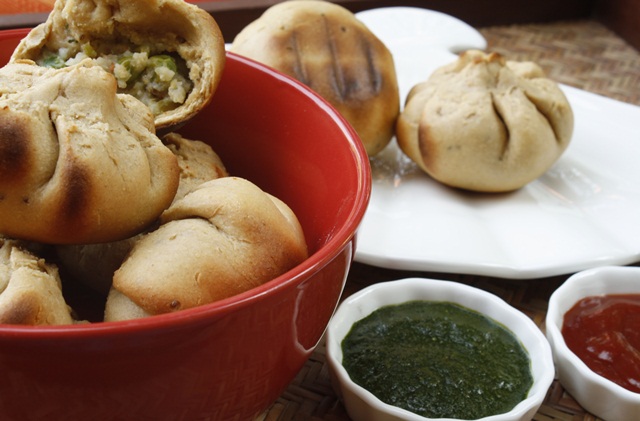
Dal Bati was a means of survival during wars
What is the best food to eat inRajasthan? It is Dal Bati Churma in Jaipur, Mewar, Jodhpur, Bikaner, Jaisalmer and Udaipur. How the recipe of Dal Bati Churma was invented is a story worth sharing. The origin of this Rajasthani food is the famous Chittorgarh Fort in Mewar. Bati is dough of wheat dipped in ghee, a long-lasting food which the Rajput kings of Mewar required for survival in adverse conditions during wars. Bati could be made with the few ingredients and the little water available in the barren lands of Rajasthan. This culinary invention evolved into a delight with two other items – Dal and Churma – over the years.
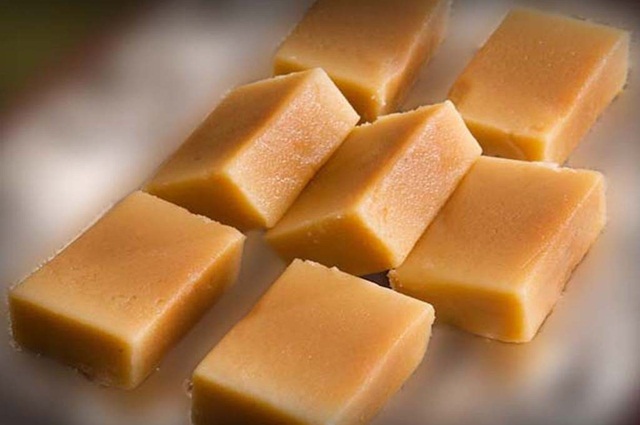
Mysore Pak journeyed from palace to public
What is the best taste of Mysore? It is the Mysore Pak, a signature sweetmeat of South India. The Mysore Pak history is traced to the kitchen of the Mysore Palace in the early 20th century when Nalawadi Krishnaraja Wodeyar was the king in power. Kakasura Madappa, the then royal cook in the Mysore Palace, used to please the King with different dishes. One day he made new sweet dish with the mix of chickpea flour, ghee and sugar. When the King tasted it, it melted at the tip of his tongue. On being asked the name of the dish, the cook invented the name ‘Mysore Paka’ in a split of second. ‘Paka’ is a Kannada word meaning a sweet concoction.
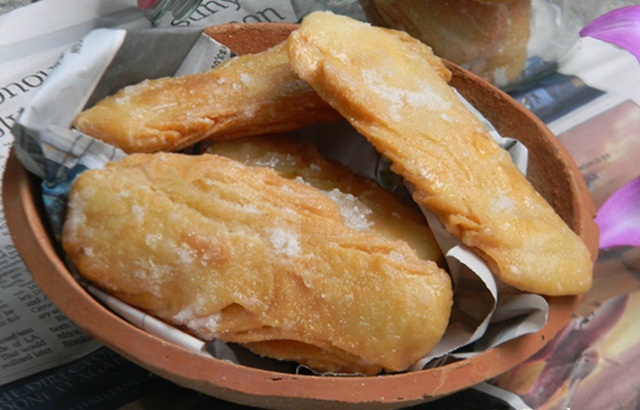
Khaja is inherited from the Mauryan & Gupta empires
What is the best sweet of Odisha? Undoubtedly, it is Khaja. Though the culinary art of making Khaja is a matter of pride for the people of Orissa, the recipe is believed to have been borrowed from the Gangetic plains of Bihar around 2000 years ago. The history of Khaja dates back to the Maurya and Gupta empires in ancient India. Today, Bihar, Odisha, Jharkhand and Andhra Pradesh are homes to this Indian dessert. Each of these states offers a different taste of Khaja. The Khaja of Rajgir in Bihar is famous for its puffiness, while the Khaja of Kakinada in Andhra Pradesh is known for its dry outside and juicy inside.
Jalebi is not essentially Indian but Asian in identity
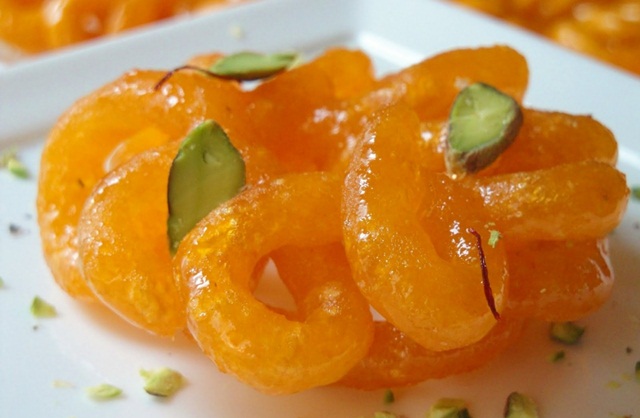
Jalebi, one of the most popular Indian sweet dishes, owes its origin to West Asia. The Persian-speaking invaders introduced Jalebi to India in the medieval era. This sweetmeat was called ‘Kundalika’, and ‘Jalavallika’ in India in the 15th century. The poor were offered platefuls of Jalebi during Ramadan in Iran. It is called ‘Zalabia’ in the Arabian countries, ‘Zilebi’ in the Maldives, ‘Zlebia’ in Tunisia, Libya and Algeria, and ‘Jeri’ in Nepal. References to the Indian version of Jalebi are found in “Priyamkarnrpakatha” by Jinasura, a Jain author of the mid-15th century.
Dum Biryani was a meal for the poor in Awadh
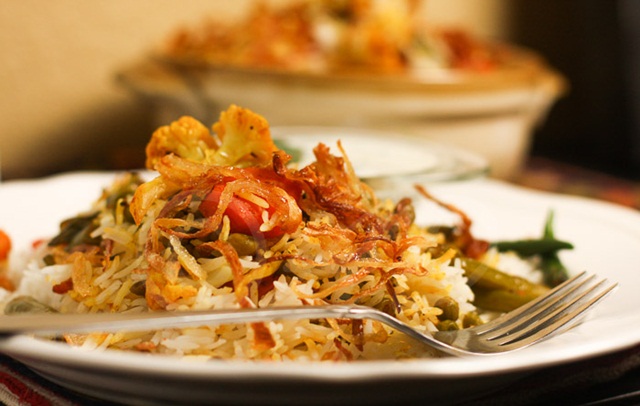
The origin of Biryani is the princely state of Hyderabad in the era of Nizams, according to several historic sources. The recipe of Biryani is as old as the Mughal history of India, according to some historians. Some debate that Biryani was introduced during Timur’s invasion of India in the early medieval era. Though the origin of Biryani is debated, Dum Biryani or Biryani of Awadh was originated in Lucknow. The Nawab of Awadh ordered to cook a meal in huge handis (round-shaped brass pots) for all the poor people of his region when there was scarcity of food. A huge amount of food was cooked with minimum resources in covered and sealed pots. This art of cooking became known as ‘dum’.
History of Indian sports – Information, Facts, Players and Traditional Indian Sports
The history of Indian sports is believed to be 8000 years old, from the time of Indus Valley civilization. Indians were one of the most modern and developed civilization in the ancient period.
In fact, many historians are still astonished by the civilizations’ neat architecture, hygiene and overall sense of town planning. However, they didn’t stop there. many pieces of evidence suggest that the people played an early form of chess and invented dice. The existence of seals recovered from the sites of Indus valley and other artefacts also prove the fact that hunting and boxing were practised then.
Ancient History of Indian Sports
In and around 975 B.C. the love for chariot-racing and wrestling was common in both in India and Greece, where Olympic was first introduced.
During the Vedic India, dehvada or the body-way is defined as “one of the ways to full realization”. In times of Rig-Veda, Ramayana and Mahabharata, the men of stature and circumstance got competent with each other in chariot-racing, archery, horsemanship, military tactics, wrestling, weight-lifting, swimming and hunting.
From the time Indian Vedic history is recorded, the relationship between the Guru (teacher) and his student (hisyo) has been considered as an integral part in the history of Indian sports.
Sports in India reached new heights when Buddhism came into practice. Tiruvedacharya in Villas Mani describes many fascinating games. They are archery, equitation, hammer-throwing and chariot-racing.
During Manas Olhas (1135 A.D.), Someshwar writes about Bhrashram (modern-day weight-lifting), Bhramanshram (walking in today’s time) and also about Mall-Stambha (the sport of wrestling).
One can easily notice that today’s Olympic disciplines are sophisticated versions of ancient games played in India. Chess, wrestling, polo, archery and hockey (possibly an alter version of polo) are some of the games believed to have originated in India, and a part of the great history of indian sports.
History of Indian Sports during the Vedic Era
The history of Indian sports can be traced back to our Vedic age. During the era of Ramayana & Mahabharata, around 1900 BC – 7000 BC, men of status & honour were expected to be competitive in sports like Archery, horsemanship, wrestling, weight-lifting, swimming & hunting.
One of the Vedas, Atharvaveda, written 3000-3200 years back says “Duty is in my right hand and the fruits of victory in my left”. It essentially holds the same sentiment of traditional Olympic oath,
Apart from the concept of zero and the rudimentary theory atoms, India has given a lot many inventions to the world. The most prominent of them is Chess. Known as “Chaturanga” in ancient days, chess was invented by the Gupta Dynasty which lasted from 280 to 550 AD. Chaturanga literally means ‘four divisions’ or ‘four corps’.
It is then through the Arabians, who called the game ‘Shatranj’, that chess spread to the rest of the world and evolved in the form that it is today. Apart from the game of Chess, India also gave the world other popular board games like Snake and Ladder, Suits, and Ludo.
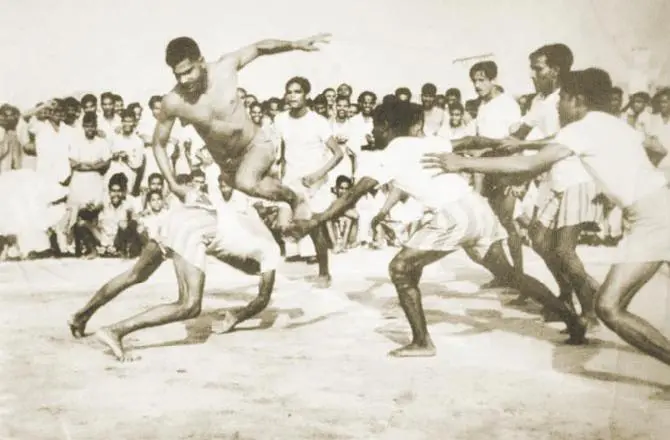
Kabaddi
Credits Mid-Day
The nation is also credited with contributing significantly when it comes to on-field sports. It is in ancient India that the world-famous sport of Kabaddi was invented. Although the sport’s exact origin still remains disputed, it is believed that Kabaddi was developed in the Vedic India. While it is believed that the sport was played fondly by the Yadavas, an ancient community residing on the western side of the country.
A hint of proof can be procured from Mahabharata which contains an account of how Arjuna manages to sneaks into hostile areas and take out enemies unscathed. This is very much in line with the Kabaddi’s gameplay.
However, despite the conflicting claims, India is still credited to have made increased the sport’s popularity by making it a competitive sport.
Wrestling or ‘Pehlwani’
Credits Speaking Tree
Although wrestling is believed to have evolved in ancient Greece and the Roman empire, there are concrete evidence that the sport was also contested in ancient India. In fact, back then, it was called ‘Malla-Yuddha‘.
It is believed to have been practised at least as early as the 5th millennium BC. In fact, there is an encyclopedia on the sport by the name Malla Purana. Developed in the 13th century, it was the modern wrestling’s precursor.
Badminton
Ancient Badminton. Image Source: Wikipedia
Although it had its origin in England, it is in India that the modern form of Badminton was evolved. The game got its modern form in the garrison city of Poona in the 1860s. In fact, it was popularly known as ‘Poona‘ itself when it was played by the Britishers.
Apart from these, other sports like Kho-Kho, Carrom, and martial arts forms like Kalaripayattu also find in India.
History of Indian Sports- Buddhism plays a major role
When we talk about the history of Indian sports, Buddhism has been quite vital in spreading the culture of sports and health in most parts of northern India.
Well, this seems obvious when the leader, Gautama Buddha, himself was a pro at Archery and Hammer-Throwing. Manas-Olhas, a classic written by Chalukya 850 years ago, mentioned about Mallakhamb.
During Peshwa Bajirao reign after 700 years, this sport got wide publicity. The writings of Manas-Olhas also included archery (Dhanurvidya or Dhanur Vinoda), duels with weapons (Anka Vinoda), and a game played on horses (Vajivahyali Vinoda).
Mughals were an avid fan of the game of polo and when they came to India they brought the game with them which became popular with many royalties. Not just polo, but the kings also embraced wrestling and boxers as a sport. One of the greatest personalities of India, Swami Vivekananda once said, “You will be nearer to Heaven through football than through the study of the Gita.”
Vivekananda was himself a fencer, boxer, gymnast and swimmer which was enough to understand the importance of sports and how it can improve lives.
History of Indian Sports during the British Era
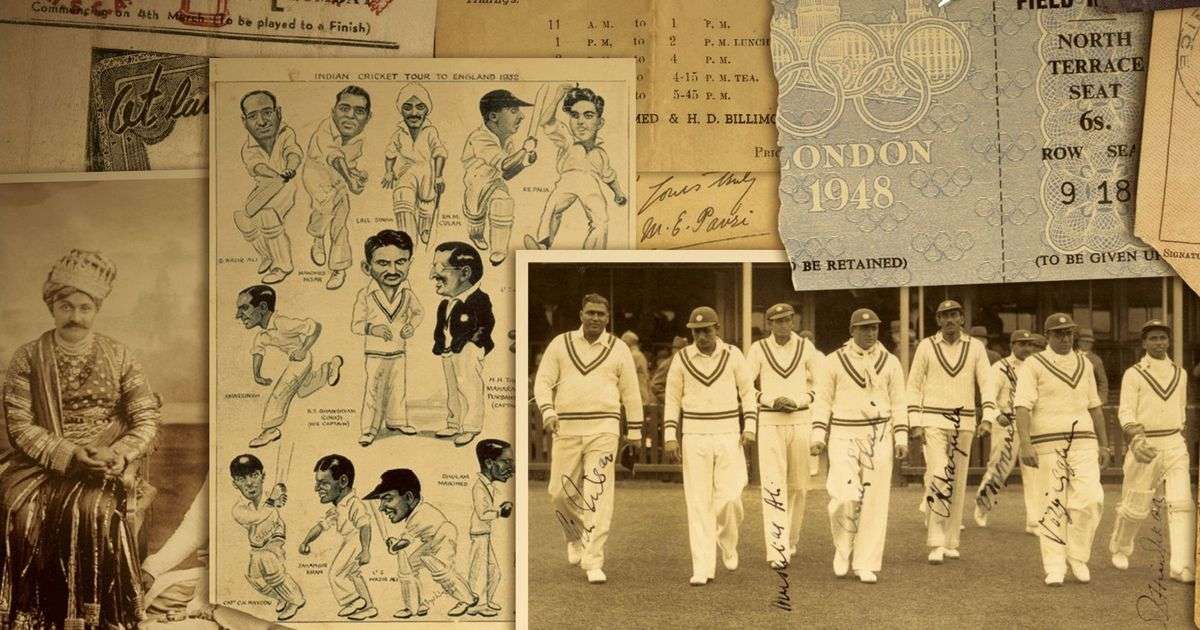
In 1721 AD, a bunch of British sailors decided to play a game of cricket on India’s western seaboard, Cambay. Cricket became the first English sport introduced in India.
Our elites used to learn cricket in schools before the independence era and the grassroots audience used to replicate it turning the game into religion now. The game of Polo transformed into a rule-based form in Manipur during the 19th century. Later it found its path to Europe & North America in the 21st century.
Mohun Bagan, the oldest football club, was established in 1889 AD. It grew from strength to strength after 1911 when Bengal crowd reacted to British jibes in a physical culture movement. This lead to a win in the Indian Football Association final. India has been a world champion at some point in Cricket, Kabbadi, Chess, Hockey, Wrestling, Billiards & Badminton.
We have won 28 medals since we first competed as a team in the Olympics, 1920. Out of nine gold medals, India won eight of them in field hockey between 1928 and 1980. Field hockey is not our national game as recently pointed by an RTI filing. Infact, India has not declared any sport as the national game.
History of Indian sports gets the glorious past from the Vedic era. In the Atharva Veda teachings, there are some well-defined values saying,” Duty is in my right hand and the fruits of victory in my left.” These resemble the sentiments of traditional Olympic oath: “…....For the Honour of my Country and the Glory of Sport”.
Modern Era Growth of Indian Sports
Dominance in Hockey
Indian Hockey – Asian Games 1966
In the 20th century, India emerged as a Hockey superpower. From its Olympic debut in 1928, the Indian Hockey team went on dominate the competition for close to 6 decades, winning gold on 8 occasions. India is the only team to have won 6 consecutive Olympic gold medals. The team scored a massive 178 goals during this phase while conceding only 7 goals. No other team in the world has managed to come even close to rivalling such dominance.
Among others, the country has given the world such hockey legends like Major Dhyan Chand (who is considered as arguably the best player to ever grace the game), Sr. Balbir Singh, Udham Singh, and Gurbux Singh.
The Rise of Indian Cricket
Skipper Kapil Dev receiving the 1983 World Cup Trophy.
In the latter part of the century, however, the downfall of hockey almost coincided with the rise of cricket in India. India won its last Olympic medal, a Gold, in 1980. Three years later, the cricket fever took over the entire nation when Kapil Dev famously lifted the 1983 World Cup (then known as the Prudential Cup ’83) in the Lord’s stadium.
It would be safe to say that the fever still exists, with the better part of the country closely following the Indian National Cricket team. Since 1983 high, the team has gone on to win another World Cup (2011), a T20 World Cup (2007), two Champions trophy (2002,2013) among other honours. The country has also produced cricketing stars like Sachin Tendulkar, Kapil Dev, Anil Kumble, MS Dhoni, and Virat Kohli among others.
Badminton – The New Cricket?
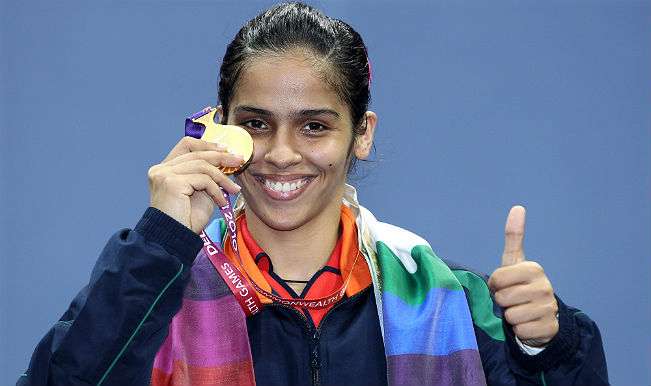
Saina Nehwal with the 2010 Delhi Commonwealth Games
Apart from the legendary Prakash Padukone (the first Indian to win the All England Badminton Championships in 1980) followed by Pullela Gopichand (who also won the title in 2001), India did not have much to show for in the world Badminton.
However, this all changed when a 22-year-old Saina Nehwal won a bronze at the 2008 London Olympics, making her the first Indian shuttler to clinch a medal in the coveted competition. That moment is considered as the turning point for the sport’s popularity in the country.
A big contribution for the youngster’s epic triumph was that of Gopichand and his badminton academy. Over the following years, the badminton bastion would go on to produce world-class talents in the face of PV Sindhu, Srikanth Kidambi and Parupalli Kashyap, making Hyderabad the country’s badminton capital. In 2016, Sindhu won the badminton silver at the Rio Olympics, thereby becoming the first Indian women to ever achieve the feat.
The player’s podium finish opened the floodgates for Badminton in India. Scores of talented young shuttlers like Lakshya Sen, Anura Prabhudesai, and Sameer Verma are now expected to take the baton forward.
Wrestling – India’s New Olympic Stronghold
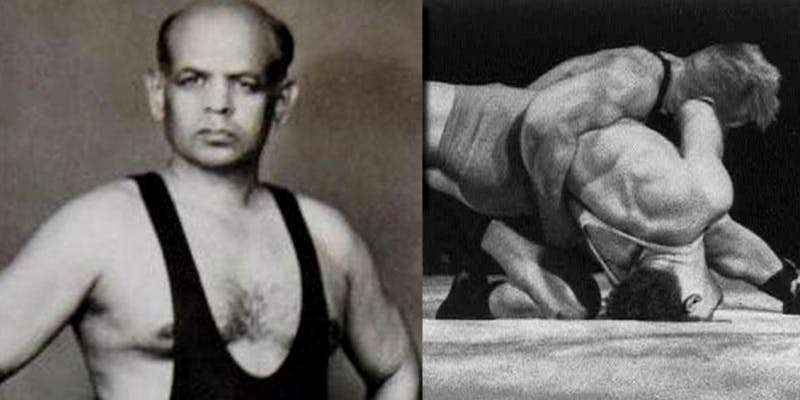
The Wrestling Great Khashaba Jadhav
As has been mentioned earlier, wrestling was played in India since the early ages. However, the country had not been able to win big on the world stage. Khashaba Dadasaheb Jadhav, a native Satara, was the first athlete to put India’s wrestling on the world map. KD Jadhav, as he was popularly known, rewrote history books when he won a bronze at the 1952 Olympic Games. He was the first individual Olympic medal winner of Independent India.
However, there was a big void in the wrestling world for the next half a century. However, things changed in the late 2000s. Sushil Kumar, a seasoned wrestler, fought against all odds to win a bronze at the 2008 Beijing Olympics. Then, at the 2012 London Olympics, India won two wrestling medals, a Silver and a Bronze, through Sushil Kumar and Yogeshwar Dutt.
In 2018, Bajrang Punia clinched silver at the World Wrestling Championships furthering their legacy. He is expected to be a big prospect for the 2020 Tokyo Olympics.
When it comes to Wrestling, Indian women have not been far behind. The revolution, that was pioneered by the now-famous ‘Phogat household’, is now turning into an unstoppable force. Sakshi Malik famously won the 2016 Olympics bronze medal to give the first proof of this. Promising next-gen wrestlers like 2018 Commonwealth Games gold medallist Vinesh Phogat, Pooja Dhanda, Divya Kakran, Ahlawat sisters are ensuring that India’s game will go to the next level in the coming years.
Boxing
Mary Kom after the historic 6th World Championship Gold (Credits Scroll.in)
Boxing is another sport which has seen a late bloom in the country. However, unlike other sports, India’s women were the flag bearers of the evolution of boxing in India. The most prominent of them all was Manipur’s Mangte Chungneijang Mary Kom. Having won her first World Championship gold medal in 2002, the blazing boxer went on to win the yellow metal on 6 occasions, a world record in itself. She also won a bronze at the 2012 Olympics apart from winning the 2018 Commonwealth Games Gold.
Vijender Singh is another boxer who has made a name for himself in the world of boxing. The pugilist, who now plies his trade in professional boxing, managed to win the coveted Olympic podium finish on two occasions. With the emerging talents like Nutlai Lalbiakkima, Sonia Chahal, and Lovlina Borgohain, the future of boxing in India is in safe hands.
Shooting
Abhinav Bindra and Gagan Narang (Credits: IBTimes)
If there is one sport that has the highest potential to reach the top in India, it has to be sports shooting. Rajyavardhan Singh Rathore, India’s current sports minister, started it all with a silver at the 2004 Olympics. However, the Abhinav Bindra upped the ante with a record-breaking Gold in the following competition. He was ably supported by other talented shooters Gagan Narang, Jitu Rai, and Heena Sidhu.
With the 2020 Olympics on the horizon, there will be high hopes from young stars like Manu Bhaker, Saurabh Chaudhary, and Mehuli Ghosh who have all won medals at the 2018 Youth Olympic Games.
These names and many others have set a strong foundation and a big inspiration for the athletes of the future with their exceptional performances.
Indian Sports Today
The IPL Model
The Highly Coveted IPL Trophy
Indian sports has experienced a vast change over the past few years, in terms of popularity, reach, and consumption. Gone are the days when only passionate people would follow sports. Today, sports has become a major source of cutting-edge entertainment. A major catalyst for this change has been the private-league culture that was brought about by the Indian Premier League (IPL).
The emergence of League Sports in India
The IPL model is not only financially rewarding but also a huge fan gatherer. It was thus not surprising to see other organizers applying the same strategy to monetize the respective sports. The Premier Badminton League (PBL), Indian Super League (ISL), and the Pro Kabaddi League (PKL) are just a few examples.
All these have struck gold in terms of attracting crowds, thus the sponsors and ultimately the all-important money. Sports is the ultimate winner here, with the clubs providing all the necessary facilities for development of the youngsters. Moreover, the acquaintance with seasoned international stars also makes for a good learning curve for the young players.
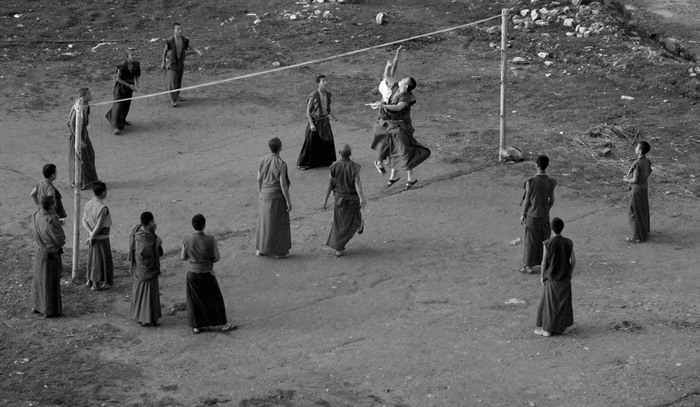
Also, the spiced up versions of the game can also bring forgotten sports back to the fore in the zip of a time. Take PKL for example. According to the Economic Times, the league that was formed in 2014 managed to attract as many as 397 million viewers in 2018. The newly formed Pro Volleyball League (PVL) managed to attract as many as 147 million viewers in its first edition itself, according to the organizers.
The one thing that has changed the way people follow sports is the digital revolution. Today, sports fans who are not in front of the TV can still watch their favourite sports live through indian sports websites and one of the myriads of online streaming routes. They can then comment about the same through
The deep penetration of the smartphones matched by the cheapening of internet data has further augmented this revolution.
According to Star India, as many as 202 million fans watched the 2018 edition of IPL on Hotstar, a huge 55.3% jump from the previous editions. This is a huge sign of how sports consumption is changing in India.
For more interesting content on Sports, stay tuned to KreedOn, the voice of Indian sports.
Of 1857-58, which sought to restore Indian supremacy, was crushed; and with the subsequent crowning of Victoria as Empress of India, the incorporation of India into the empire was complete. It was followed by India's struggle for independence, which we got in the year 1947.
Indian timeline takes us on a journey of the history of the subcontinent. Right from the ancient India, which included Bangladesh and Pakistan, to the free and divided India, this time line covers each and every aspect related to the past as well as present of the country. Read on further to explore the timeline of India.
Indus valley civilization, which flourished between 2800 BC and 1800 BC, had an advanced and flourishing economic system. The Indus valley people practiced agriculture, domesticated animals, made tools and weapons from copper, bronze and tin and even traded with some Middle East countries.
After the death of Harsha the Rajputs came into prominence on the political horizons of North India. The Rajputs were known for their bravery and chivalry but family feuds and strong notions of personal pride often resulted into conflicts. The Rajputs weakened each other by constant wrangling.
Emperor Akbar, also known as Akbar the Great or Jalaluddin Muhammad Akbar, was the third emperor of the Mughal Empire, after Babur and Humayun. He was the son of Nasiruddin Humayun and succeeded him as the emperor in the year 1556, when he was only 13 years old.
Shah Jahan, also known as Shahbuddin Mohammed Shah Jahan, was a Mughal Emperor who ruled in the Indian Subcontinent from 1628 to 1658. He was the fifth Mughal ruler, after Babur, Humayun, Akbar and Jahangir. Shah Jahan succeeded the throne after revolting against his father, Jahangir.
Chatrapati Shivaji Maharaj was the founder of the Maratha Empire in western India. He is considered to be one of the greatest warriors of his time and even today, stories of his exploits are narrated as a part of the folklore. King Shivaji used the guerrilla tactics to capture a part of, the then, dominant Mughal empire.
The History of India begins with the Indus Valley Civilization and the coming of the Aryans. These two phases are generally described as the pre-Vedic and Vedic periods. The earliest literary source that sheds light on India's past is the Rig Veda. It is difficult to date this work with any accuracy on the basis of tradition and ambiguous astronomical information contained in the hymns.
During the late 16th and the 17th Centuries, the European trading companies in India competed with each other ferociously. By the last quarter of the 18th Century the English had outdone all others and established themselves as the dominant power in India. The British administered India for a period of about two centuries and brought about revolutionary changes in the social, political and the economic life of the country.